In December 2020, the second COVID lockdown became a reality in the Netherlands. The dangerous virus was spreading again, and the number of people who became seriously ill or died increased once more. Daily life came to a standstill again. I taught my secondary school classes from home, which I found dreadful. Adding to this “minor misery,” the area of my home spot was hermetically closed off, meaning I could not go out on the water to go kitesurfing.
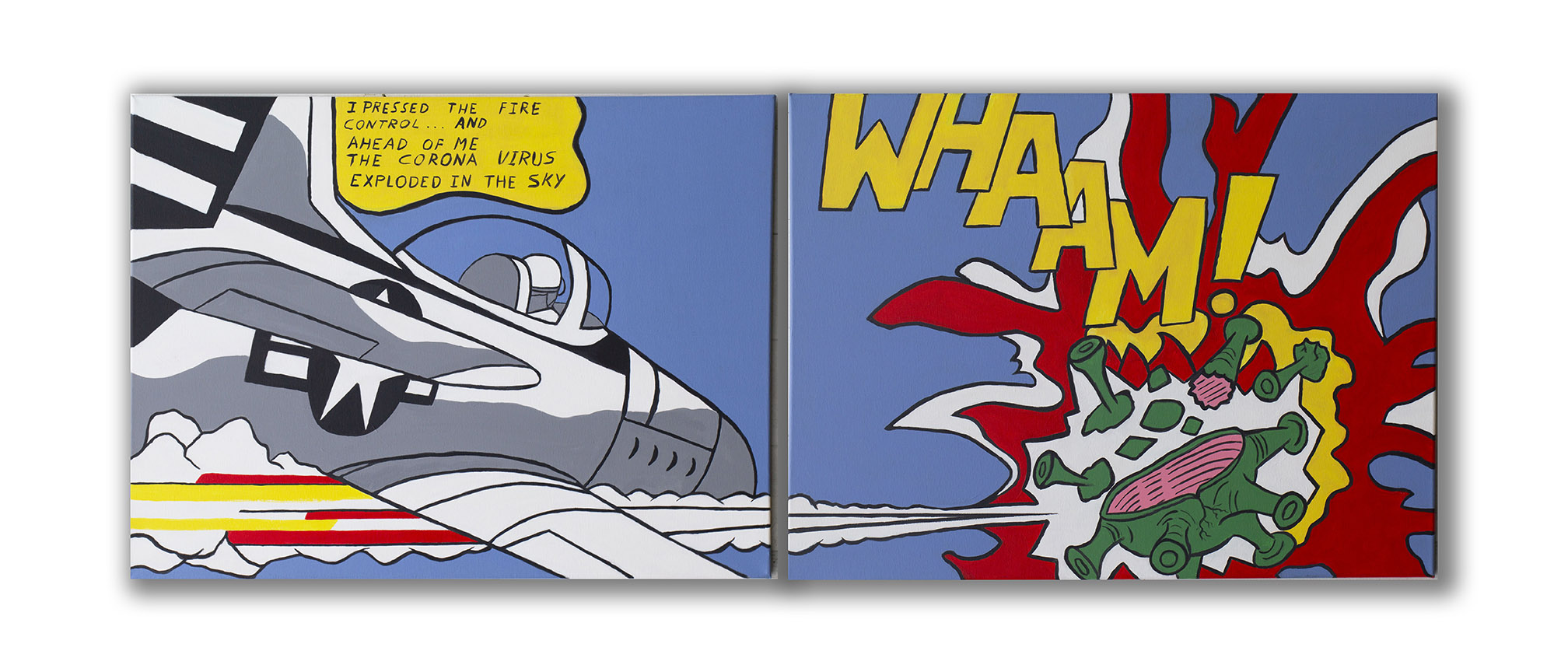
To give all of this a place, I decided to start the project Whaam, with the virus taking on the role of the “bad guy.”
This project was also a study of the work of Roy Lichtenstein, one of my favorite artists. As a child, I loved reading comic books from my father’s collection. He had a cupboard full of Suske and Wiske by Willy Vandersteen, Tintin by Hergé, and also the more realistically drawn Blake and Mortimer by Edgar P. Jacobs, as well as Michel Vaillant by Jean and Philippe Graton. When I moved to Apeldoorn in 2004, I came across a stunning graffiti piece near my home in which Lichtenstein’s Whaam! had been painted as an impressive “piece” on the pillar of a viaduct.
To this day, I remain deeply impressed by the talent and skills of comic artists. The number of drawings they produce for a single story is enormous, not to mention the dedication required to draw the same character over and over again, story after story. Drawing is something I already enjoyed as a child and still take great pleasure in today, although I do it too little and find it challenging to maintain my technical skills. I hope we can also inspire the next generation to keep drawing, despite all the competition from screens. Paper and pencils, what more does a person really need?
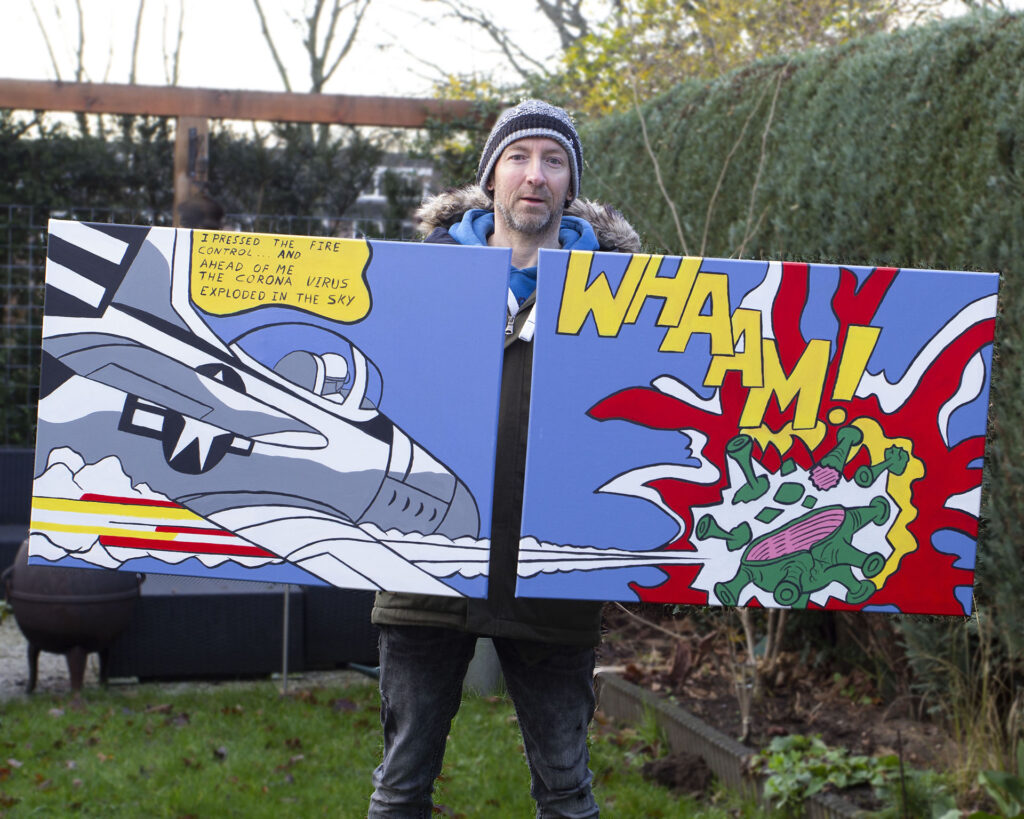
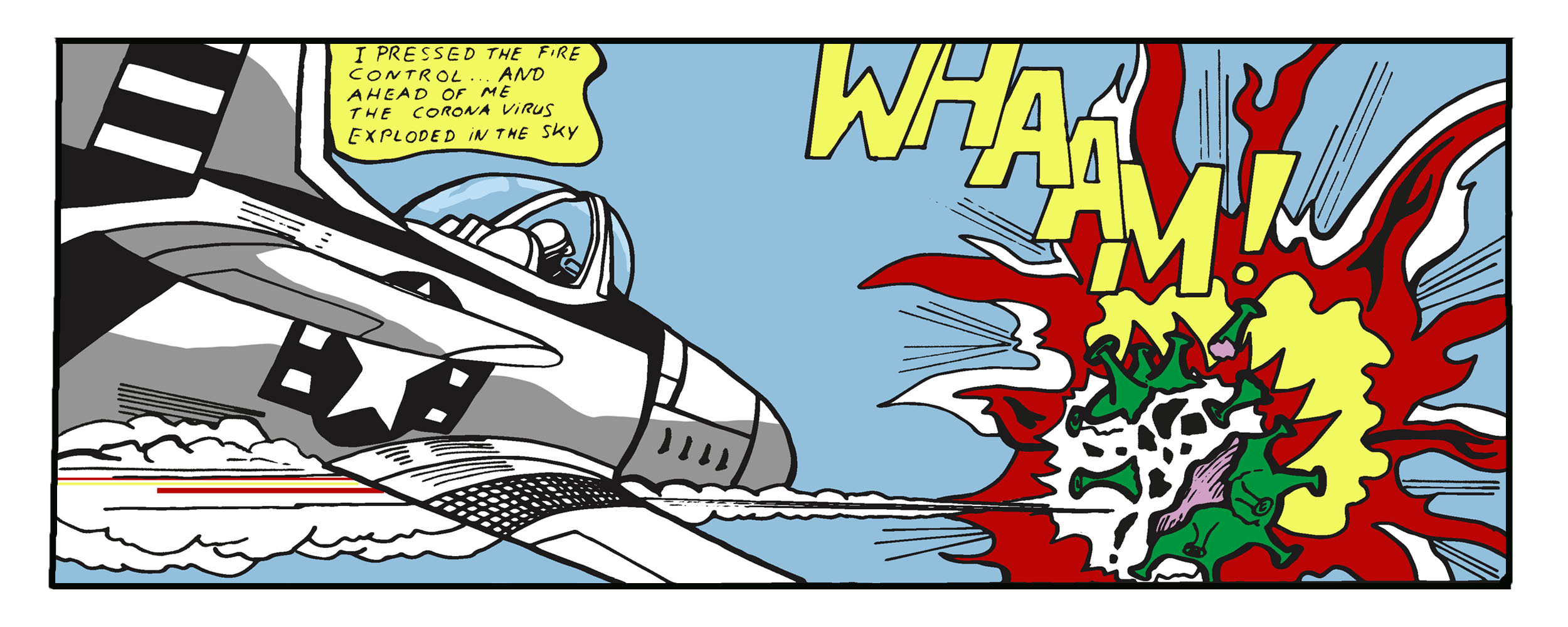
For my Whaam! project, I began with a pencil drawing, aiming to stay as close as possible to the original work. I replaced the hostile aircraft with the virus. I then scanned the drawing and used Adobe Illustrator to convert it into a digital illustration, where I added color. In addition, I created an acrylic painting: a diptych, just like Lichtenstein’s original work. In the summer of 2024, I visited Tate Modern in London with my family and was finally able to admire the original work in person.
Lichtenstein’s work caused a great deal of controversy. Was it art, or merely imitation? His painting can be directly traced back to two images from comic books. The composition is based on the story Star Jockey from the comic magazine All-American Men of War (February 1962), drawn by Irv Novick. For the aircraft, Lichtenstein used another drawing from the story Wingmate of Doom by Jerry Grandenetti, from the same series but published in the April 1962 issue.
Through copying, transforming, and stylizing, Roy Lichtenstein became an icon of pop art and remains a lasting source of inspiration for future generations of artists.
Source: https://downthetubes.net/whaam-the-aeronautical-perspective/